GVT vs PGVT Tiles: Understanding the Difference Before Choosing the Right Tile
When selecting tiles for a residential or commercial project, one of the most common questions architects, interior designers, builders, and homeowners ask is:
Should I choose GVT or PGVT tiles?
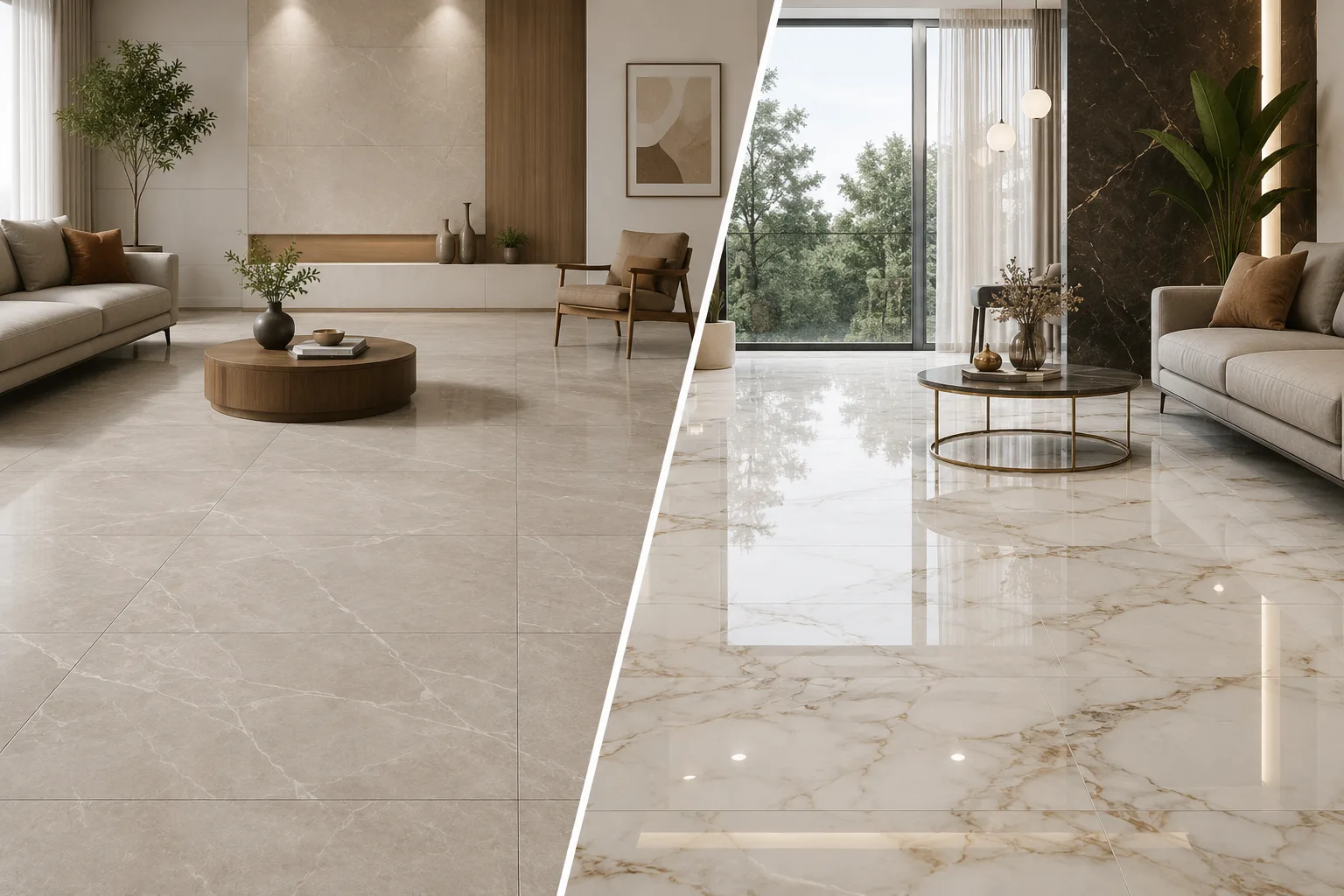
At first glance, both may appear similar. They are manufactured using advanced digital printing technology, available in a wide range of designs, and suitable for modern interiors. However, their surface finish, manufacturing process, applications, and performance characteristics differ significantly.
Understanding these differences is essential to selecting the right tile for your project.
This guide explains the technical distinctions between GVT (Glazed Vitrified Tiles) and PGVT (Polished Glazed Vitrified Tiles) to help you make an informed decision.
What Are GVT Tiles?
GVT (Glazed Vitrified Tiles) are porcelain or vitrified tiles coated with a high-quality glaze layer before firing. This glaze protects the surface while allowing advanced digital printing to reproduce natural stone, marble, wood, concrete, and designer finishes.
Unlike polished tiles, GVT tiles retain their original surface texture after manufacturing, making them suitable for areas where slip resistance or matte aesthetics are preferred.
Key Features
· Digitally printed surface
· Matte, satin, sugar, carving or textured finish
· High stain resistance
· Low water absorption
· Easy maintenance
· Suitable for walls and floors
What Are PGVT Tiles?
PGVT (Polished Glazed Vitrified Tiles) are manufactured using the same glazing process as GVT tiles but undergo an additional polishing stage after firing.
This polishing process produces a smooth, reflective surface that closely resembles polished natural marble while maintaining the technical advantages of vitrified porcelain.
Because of their luxurious appearance, PGVT tiles are widely used in premium residential and commercial interiors.
Key Features
· Mirror-like glossy finish
· Premium marble appearance
· High-definition digital printing
· Excellent stain resistance
· Low porosity
· Elegant luxury aesthetics
Manufacturing Process
Although GVT and PGVT share similar production methods, the final finishing process creates the main difference.
GVT Manufacturing
1. Premium raw materials are mixed.
2. Tiles are pressed under high pressure.
3. Glaze coating is applied.
4. Digital printing creates the design.
5. Tiles are fired at temperatures exceeding 1200°C.
6. Surface finish remains matte or textured.
PGVT Manufacturing
The process follows the same initial stages as GVT manufacturing.
After firing, the surface undergoes precision polishing using diamond abrasives to create a smooth, glossy finish.
This additional step gives PGVT its luxurious reflective appearance.
Surface Finish Comparison
GVT Tiles
· Matte finish
· Satin finish
· Carving finish
· Sugar finish
· Structured finish
· Better grip underfoot
Suitable for modern minimalist interiors and outdoor covered spaces.
PGVT Tiles
· High-gloss finish
· Reflective surface
· Premium marble appearance
· Luxurious aesthetics
· Brightens interiors by reflecting light
Ideal for elegant indoor spaces.
Water Absorption
Both GVT and PGVT belong to the vitrified tile category.
Their water absorption is generally below 0.5%, making them highly resistant to moisture.
Because of this, both are suitable for:
· Living rooms
· Bedrooms
· Kitchens
· Bathrooms
· Commercial interiors
Strength and Durability
Both tile types offer excellent mechanical strength because they are manufactured using vitrified technology.
Benefits include:
· High breaking strength
· Excellent wear resistance
· Impact resistance
· Long service life
· Resistance to daily foot traffic
For heavy commercial applications, the choice depends more on the required finish than on structural performance.
Scratch and Stain Resistance
Both GVT and PGVT provide outstanding stain resistance due to their glazed surface.
However:
GVT
· Better at hiding light scratches
· Suitable for high-traffic areas
· Easier to maintain in busy environments
PGVT
· Highly stain resistant
· Glossy surface may show dust and footprints more easily
· Requires more frequent cleaning to maintain its shine
Applications
Best Applications for GVT Tiles
· Kitchens
· Bathrooms
· Bedrooms
· Living rooms
· Offices
· Retail stores
· Restaurants
· Covered balconies
· Feature walls
Their textured finishes also make them suitable for areas requiring improved slip resistance.
Best Applications for PGVT Tiles
· Luxury living rooms
· Hotel lobbies
· Reception areas
· Premium offices
· Villas
· Shopping malls
· Showrooms
· High-end residential projects
PGVT is chosen primarily for its luxurious visual appeal.
Design Possibilities
Modern digital printing allows both GVT and PGVT to replicate:
· Marble
· Wood
· Concrete
· Terrazzo
· Onyx
· Travertine
· Natural stone
Large-format porcelain has further expanded these possibilities by creating seamless contemporary interiors.
Which Tile Should You Choose?
Choose GVT Tiles if your project requires:
· Matte finishes
· Better slip resistance
· Contemporary aesthetics
· Low-maintenance flooring
· High-traffic applications
Choose PGVT Tiles if you want:
· Luxurious interiors
· Premium marble appearance
· Bright reflective spaces
· Elegant reception areas
· Luxury residential projects
Both products offer excellent durability—the decision largely depends on the desired finish and application.
Why International Buyers Prefer Premium Vitrified Tiles
Architects, builders, and distributors worldwide increasingly specify vitrified porcelain because it combines aesthetics with long-term performance.
Premium GVT and PGVT tiles offer:
✔ Low water absorption
✔ High dimensional accuracy
✔ Consistent digital designs
✔ Easy maintenance
✔ Excellent stain resistance
✔ Long service life
✔ Suitable for residential and commercial projects
Manufactured to Global Standards
At Probity Ceramic LLP, we manufacture premium GVT and PGVT porcelain tiles using advanced digital printing technology and strict quality control processes.
Our collections are designed to meet international architectural standards and are supplied to distributors, wholesalers, architects, builders, and project developers across global markets.
Whether you require contemporary matte finishes or luxurious polished marble-look surfaces, our vitrified tile collections combine design excellence with export-quality manufacturing.
Conclusion
There is no universal “better” option between GVT and PGVT tiles—only the right choice for your project.
If functionality, subtle elegance, and improved grip are priorities, GVT tiles are an excellent solution.
If your goal is to create luxurious interiors with the brilliance of polished marble, PGVT tiles provide exceptional visual impact.
Understanding the technical differences between these two tile categories helps architects, designers, builders, and homeowners make confident decisions that balance aesthetics, performance, and long-term value.
Related Articles
Stay Comfortable This Summer: Why European Homes Are Choosing Wood-Look Porcelain Tiles Over Natural Wood
Ceramic Tiles vs Porcelain Tiles: Which One is Better for Your Home or Commercial Project?
Carrara Collection: Where Timeless Italian Elegance Meets Modern Porcelain Innovation
Recommended Products


RIBBED_PICKLE_GREEN

RIBBED_PEWTER

RIBBED_DARK_GREY